

Why We Should Be Eating Dinner for Breakfast
The simple shift that helped me front-load protein, stay full longer, and stop playing catch-up at the end of the day

For a while, breakfast was the lightest meal of my day. I would have something like toast, oatmeal, fruit, or a smoothie, then save the chicken, fish, beans, and other substantial proteins for lunch and dinner.
The problem was that I would eat what felt like full, balanced meals all day, check in after dinner, and realize I was still 30 to 50 grams short of my protein goal.
At that point, the last thing I wanted was another chicken breast, a protein shake, or a random high-protein snack just to hit a number. So I stopped treating breakfast like it had to be “breakfast food.”
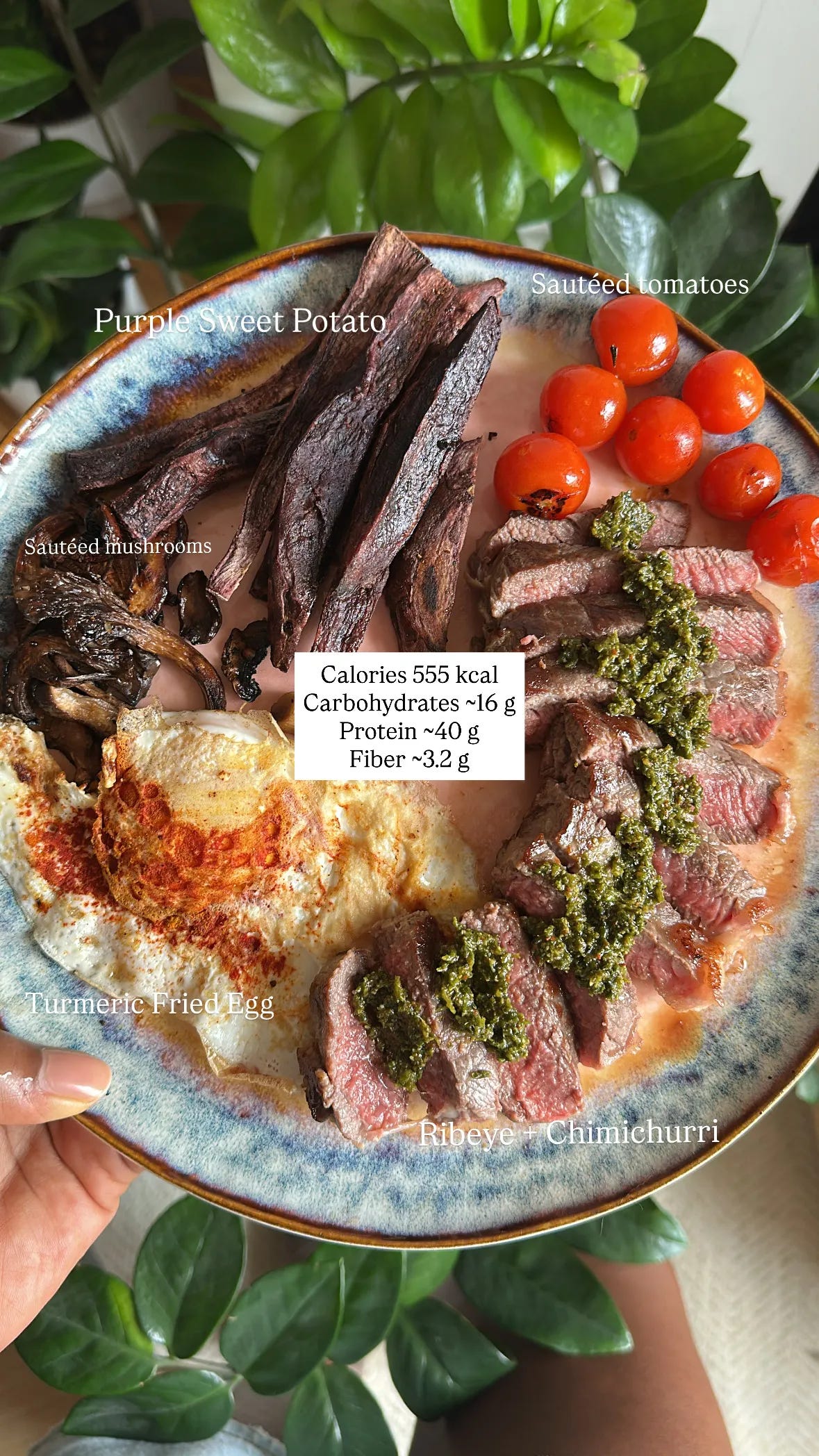
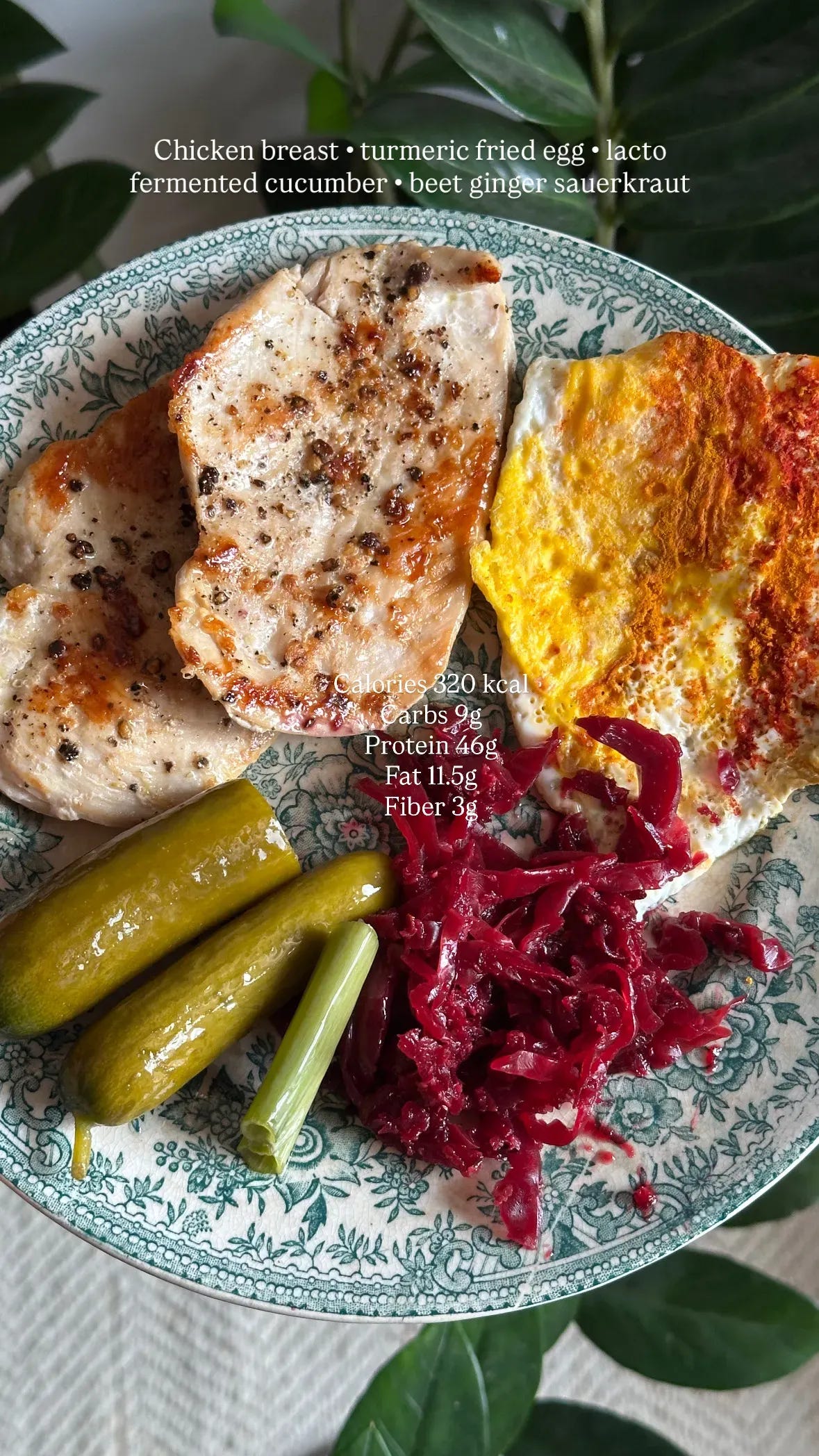
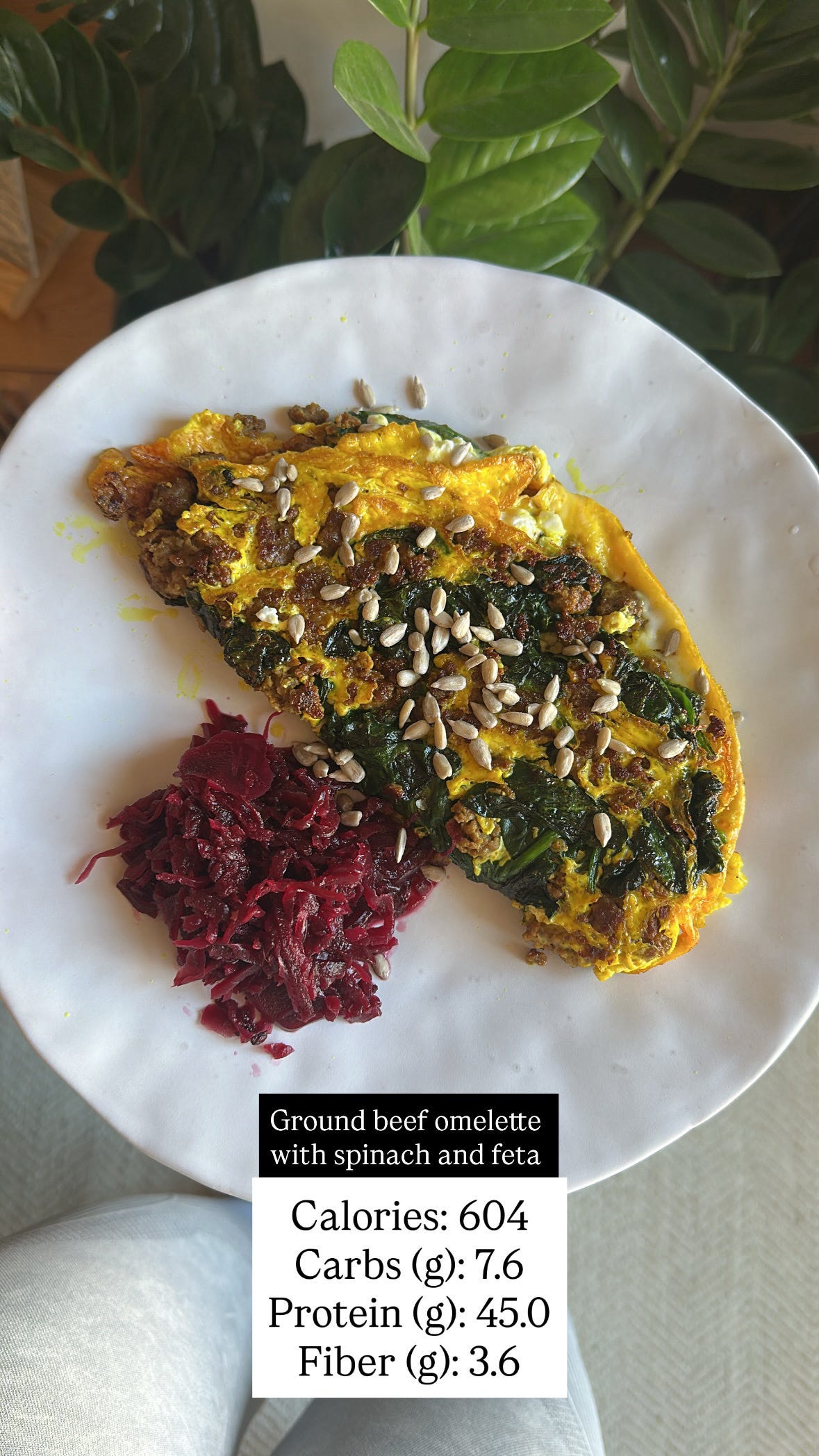
I started eating the kinds of foods I would normally save for dinner. Some mornings, I have eggs with grilled chicken and fermented vegetables. Other days, I eat leftover ground beef with sautéed greens and avocado. It may not look like a standard American breakfast, but it keeps me full and gives my body what it needs.That shift completely changed the way I think about my first meal
.
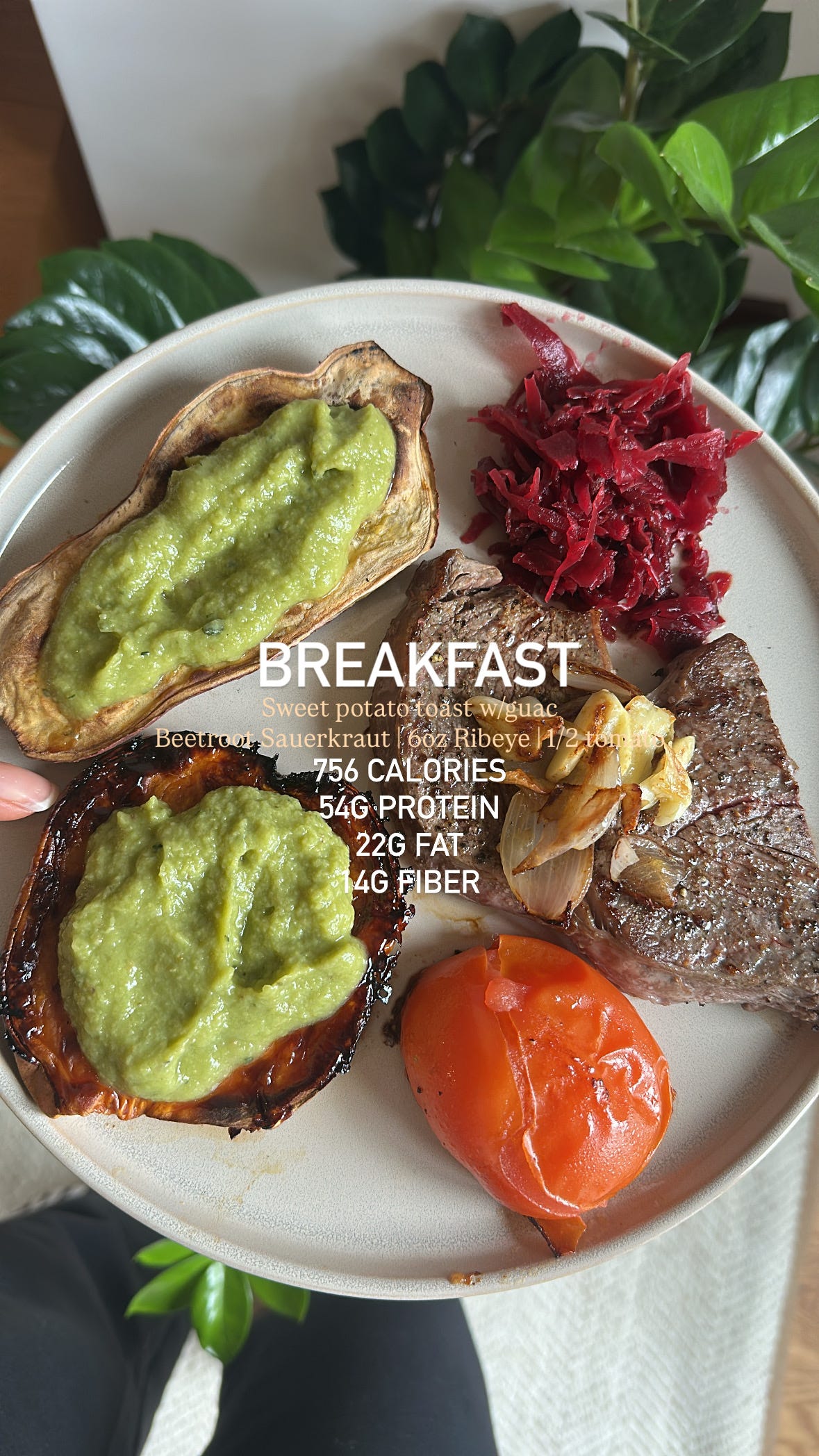
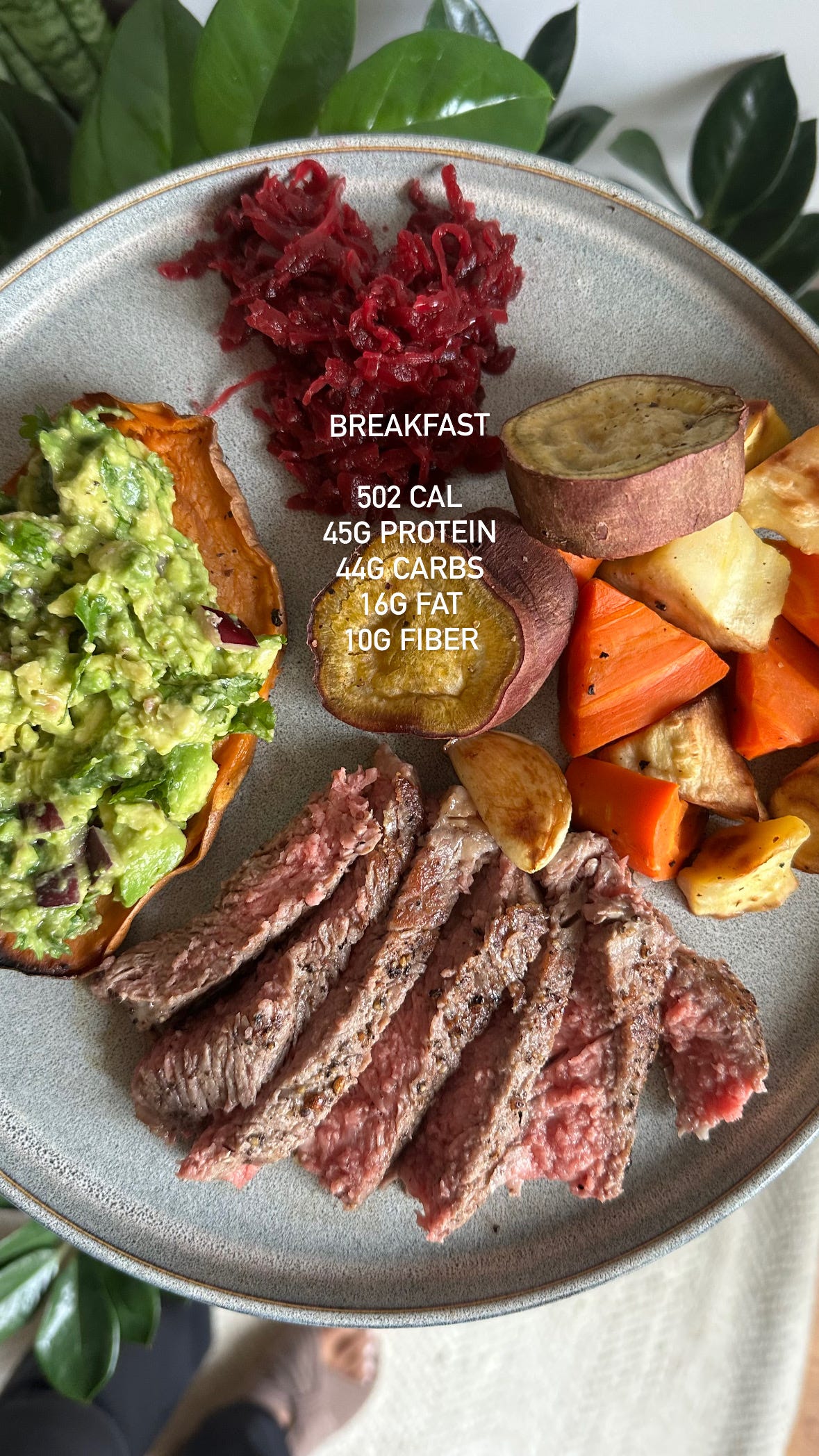
Now, I aim for 40 to 50 grams of protein with breakfast or my first full meal. There is no nutritional rule saying chicken can only be eaten after noon. Once you allow yourself to add last night’s chicken, steak, fish, beans, or turkey meatballs to the plate, reaching a higher protein target becomes much easier.
Starting strong helps me reach my daily goal without playing catch-up at night. It also keeps me satisfied through the morning and supports muscle maintenance and recovery without forcing huge portions later. I still include protein at lunch and dinner, but breakfast gives me a solid head start.
And protein is only the foundation of the plate. I still pair it with fiber-rich carbohydrates, healthy fats, and something fresh or fermented so the meal feels balanced, nourishing, and complete.
My Simple Formula for Building a High-Protein Breakfast Plate
I use the same basic formula whether I am making breakfast, lunch, or dinner:
Protein base + fiber-rich carbohydrate + healthy fat + something fresh or fermented
This keeps the meal balanced without requiring complicated calculations.
1. Start With a Protein Base
This is the anchor of the plate. Depending on the meal, I may choose:
Eggs or egg whites
Chicken breast
Chicken or turkey sausage
Ground turkey or beef
Salmon, smoked salmon, sardines, or tuna
Greek yogurt
Cottage cheese
Tofu or tempeh
Beans or lentils
A quality protein powder
I usually combine two or three sources rather than expecting one ingredient to provide the full 40 to 50 grams.
For example, eggs alone may not get me there without requiring a much larger portion than I want. But eggs paired with chicken sausage and cottage cheese can easily turn into a protein-rich meal.
2. Add a Fiber-Rich Carbohydrate
Protein may keep me satisfied, but fiber adds another layer of fullness while supporting digestion and gut health.
My usual choices include:
Buckwheat bread
Beans or lentils
Sweet potatoes
Berries
Chia or flaxseeds
Vegetables
High-fiber granola
Cooked buckwheat
Oats, when desired
I am not afraid of carbohydrates. I simply want them to contribute something beyond quick energy.
A slice of my buckwheat bread, for example, provides approximately 7 grams of protein and 8 grams of fiber, so it supports both sides of the plate.
3. Include a Healthy Fat
Fat adds flavor, satisfaction, and helps the meal feel complete.
This may come from:
Avocado
Olive oil
Nuts or seeds
Nut butter
Hemp seeds
Chia seeds
Egg yolks
Salmon
I do not add large amounts just to check a box. Many protein foods already contain some fat, so I adjust the meal based on what is already on the plate.
4. Finish With Something Fresh or Fermented
This is often what makes the plate feel colorful and alive.
I might add:
Tomatoes
Cucumbers
Fresh fruit
Sautéed greens
Sprouts
Sauerkraut
Fermented vegetables
Fresh herbs
A few spoonfuls of fermented vegetables add acidity and crunch, while fresh produce brings fiber, vitamins, minerals, and more variety to the meal.
My Biggest High-Protein Breakfast Hacks
Make a Big Batch of Grilled Chicken
This might be my most useful hack.
I grill or roast a large batch of seasoned chicken and keep it in the refrigerator. Then I can add it to breakfast, salads, bowls, wraps, or lunch without having to cook a new protein every time.
For breakfast, I may slice it alongside eggs, add it to a scramble, or serve it with buckwheat toast, tomatoes, and fermented vegetables.
It is simple, clean, and removes one of the biggest barriers to eating enough protein: having to cook it from scratch every time.
Boil a Dozen Eggs at Once
Hard-boiled eggs are one of the easiest foods to prepare in advance.
I boil a dozen, refrigerate them, and use them throughout the week. They can become part of a breakfast plate, a snack, a salad, or a quick lunch.
An egg may not provide a huge amount of protein by itself, but having them prepared makes it easy to add another 6 or 7 grams to a meal without any extra cooking.
Stop Expecting Eggs to Do All the Work
Eggs are nutrient-dense and absolutely belong on my breakfast plate, but two eggs provide only around 12 to 14 grams of protein.
That is a strong start, not necessarily a complete high-protein breakfast.
I pair them with foods such as:
Chicken
Turkey sausage
Cottage cheese
Greek yogurt
Smoked salmon
Beans
Tuna
This makes reaching my goal much easier without needing to eat six eggs.
Prepare One Protein-Rich Staple Every Week
I do not prep seven identical breakfasts. Instead, I prepare one or two components that can be mixed and matched.
That might be:
Grilled chicken
Breakfast sausage patties
Hard-boiled eggs
A container of cottage cheese
A batch of high-protein granola
Cooked beans
A tray of roasted vegetables
Having those building blocks ready means breakfast can come together in minutes.
Use Leftovers on Purpose
Leftovers are not just for lunch.
If I make salmon, chicken, steak, meatballs, beans, or roasted vegetables for dinner, I intentionally save enough to use with breakfast the following morning.
This saves money, prevents food waste, and makes high-protein eating much more realistic.
What 40–50 Grams of Protein Can Look Like
These are not strict meal plans. Exact protein amounts will depend on your portions and the specific products you use, but they show how combining several foods can quickly build a more substantial breakfast.
Eggs, Chicken Sausage, Cottage Cheese, and Tomato
A plate might include:
2 eggs
2 chicken sausage patties
½ cup cottage cheese
Sliced tomatoes
Fermented vegetables
The eggs provide protein and fat, the sausage and cottage cheese bring the meal closer to the 40-to-50-gram range, and the vegetables add freshness, fiber, and acidity.
This is one of my favorite savory breakfast combinations because it feels substantial without being complicated.
Greek Yogurt or Cottage Cheese Bowl With High-Protein Granola
Start with:
1 to 1½ cups Greek yogurt or cottage cheese
High-protein granola
Hemp, chia, or flaxseeds
Berries
Nut butter, if desired
A larger serving of Greek yogurt or cottage cheese can provide a strong protein base. The seeds, nuts, and granola add more protein, fiber, texture, and healthy fats.
This is a good option when I want something quick, cold, and slightly sweet.
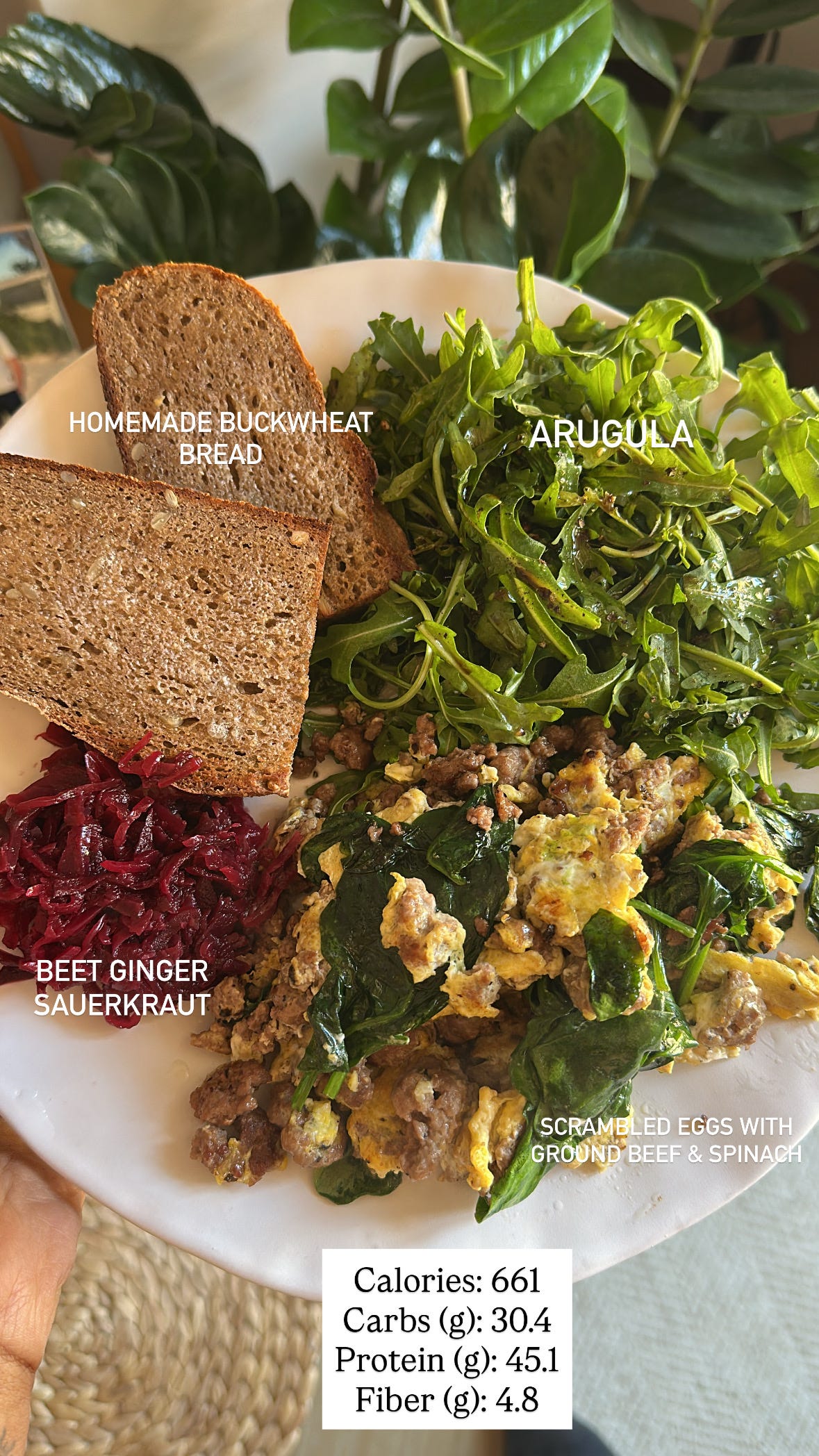
Breakfast Scramble With Chicken or Turkey
Combine:
2 eggs
Egg whites, if desired
Chopped grilled chicken or turkey
Spinach or kale
Mushrooms
Avocado
Fermented vegetables on the side
Adding leftover chicken or turkey transforms a standard egg scramble into a much higher-protein meal.
This is also an easy way to use small amounts of cooked meat that may not be enough for a complete lunch or dinner.
Smoked Salmon or Tuna Breakfast Plate
Build a plate with:
Smoked salmon or tuna
Eggs
Cottage cheese or Greek yogurt
Cucumber and tomato
Avocado
Buckwheat bread
Fresh herbs
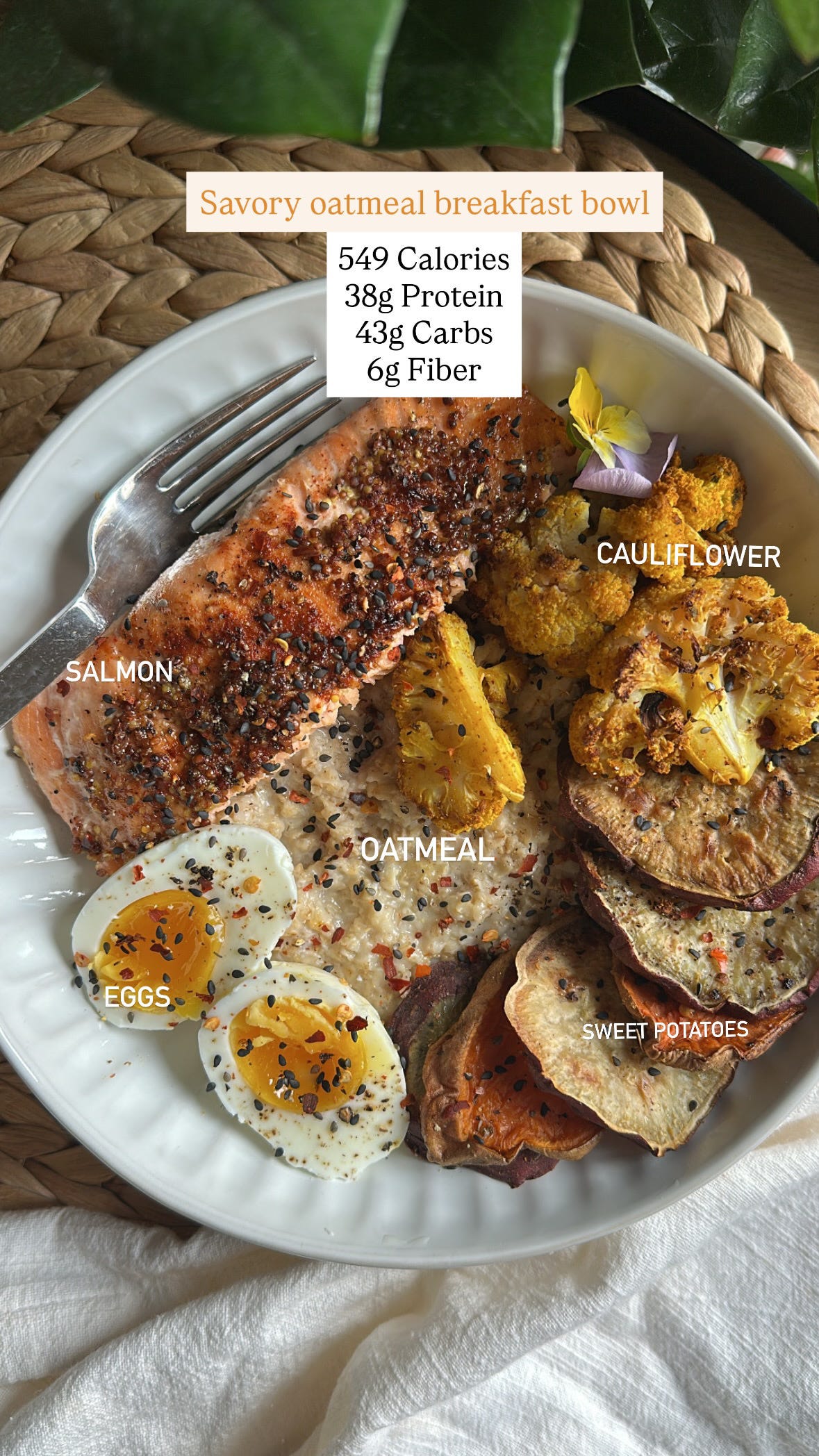
Fish at breakfast may sound unconventional to some people, but it is one of the quickest ways to add a substantial amount of protein without cooking another meat.
The salty fish, creamy avocado, crisp vegetables, and toasted bread make this feel like a full brunch plate.
Protein Smoothie With Chia, Flax, and Berries
Blend:
Protein powder
Greek yogurt or cottage cheese
Milk of choice
Chia or flaxseeds
Berries
Nut butter, if needed
A smoothie can reach 40 grams of protein, but it usually requires more than fruit and a single scoop of protein powder.
Adding Greek yogurt or cottage cheese gives it more substance, while chia, flax, berries, and nut butter contribute fiber and healthy fats.
I prefer smoothies thick enough to eat slowly rather than something I drink in two minutes and immediately forget about.
Buckwheat Bread With Eggs and Cottage Cheese
Try:
1 to 2 slices of buckwheat bread
2 eggs
Cottage cheese
Tomato or cucumber
Sprouts or fermented vegetables
Because my buckwheat bread contains approximately 7 grams of protein per slice, it contributes much more than standard toast.
Pairing it with eggs and cottage cheese creates a balanced breakfast with substantial protein and fiber without requiring a large portion of meat.
Breakfast Bowl With Eggs, Beans, Greens, and Fermented Vegetables
Build the bowl with:
Eggs
Black beans, chickpeas, or lentils
Grilled chicken or ground turkey, if desired
Sautéed greens
Avocado
Sauerkraut or fermented vegetables
Beans provide both protein and fiber, making them one of my favorite breakfast additions.
Add eggs and another protein source, and the bowl can easily become a filling 40-to-50-gram meal that also supports digestion.
You Do Not Have to Jump Straight to 50 Grams
Forty to 50 grams is the range that works well for my appetite, body, activity level, and overall daily protein goal.
It is not a universal breakfast requirement.
Your ideal amount may be lower or higher depending on your body size, activity level, health needs, total daily intake, and personal preferences. Total daily protein still matters, and no single meal has to be perfect.
For someone currently eating 10 grams of protein at breakfast, increasing to 20 or 30 grams may already make a meaningful difference. You can start by adding one thing:
An extra egg
Cottage cheese
Greek yogurt
Chicken sausage
Leftover chicken
Hemp seeds
A side of beans
A higher-protein bread
The goal is not to force-feed yourself in the morning. The goal is to build a first meal that supports you for more than an hour and makes the rest of the day easier.
The Bigger Lesson
Front-loading protein has less to do with chasing a perfect number and more to do with creating a reliable system. When I start the day with a strong protein base, I am less likely to spend the afternoon searching for snacks or arrive at dinner realizing I still need 70 grams of protein.
And once I stopped thinking breakfast had to look like “breakfast,” everything became easier.
Chicken can be breakfast. Beans can be breakfast. Salmon can be breakfast. Leftovers can absolutely be breakfast.
Your body does not care whether a food traditionally belongs at 8 a.m. or 6 p.m. It cares about the nutrients you consistently provide. So here is the hack:
Start with protein, add fiber, include a healthy fat, finish with something fresh or fermented, and do not be afraid to have dinner for breakfast.
What is your favorite high-protein breakfast, and would you try eating dinner foods in the morning? Leave yours in the comments so we can all steal a few new ideas. 🩷